How to Safely Hang China Top Christmas Lights on High Peaks?

Time:2026-09-15 Author:Sienna
0%

Hanging Christmas lights on high peaks can transform a dark roofline into a clear, welcoming display. Yet elevated installation demands more than attractive bulbs and a long extension cord. The central question is how to hang Christmas lights on high peaks safely without turning seasonal decorating into an avoidable emergency. The U.S. Consumer Product Safety Commission reported an estimated 14,800 holiday decorating injuries treated in emergency departments during November and December 2023. Falls represented about 45% of those injuries. That figure makes roof access a serious planning issue, not a minor inconvenience.

This guide examines practical methods for installing China Top Christmas Lights around steep gables, tall eaves, and narrow ridge sections. It focuses on ground-level measuring, suitable clips, weather-rated connections, and safer access equipment. The National Fire Protection Association recorded an average of 790 home structure fires involving holiday decorations each year from 2016 through 2020. Electrical loading and heat exposure therefore deserve careful attention. Use lights and accessories bearing recognized safety certification, inspect every wire, and replace damaged sets. Keep connections away from standing water. Never improvise with loose staples or overloaded outlets.

A stable ladder matters.

OSHA recommends maintaining three points of contact while climbing. A qualified helper should secure the ladder and monitor changing conditions. Wind can turn a simple peak into a moving hazard. I have seen plans fail because measurements were taken from the ground incorrectly. That mistake is easy to make. It is also expensive. The following sections explain a cautious process, while acknowledging that some roof shapes require a professional installer instead.
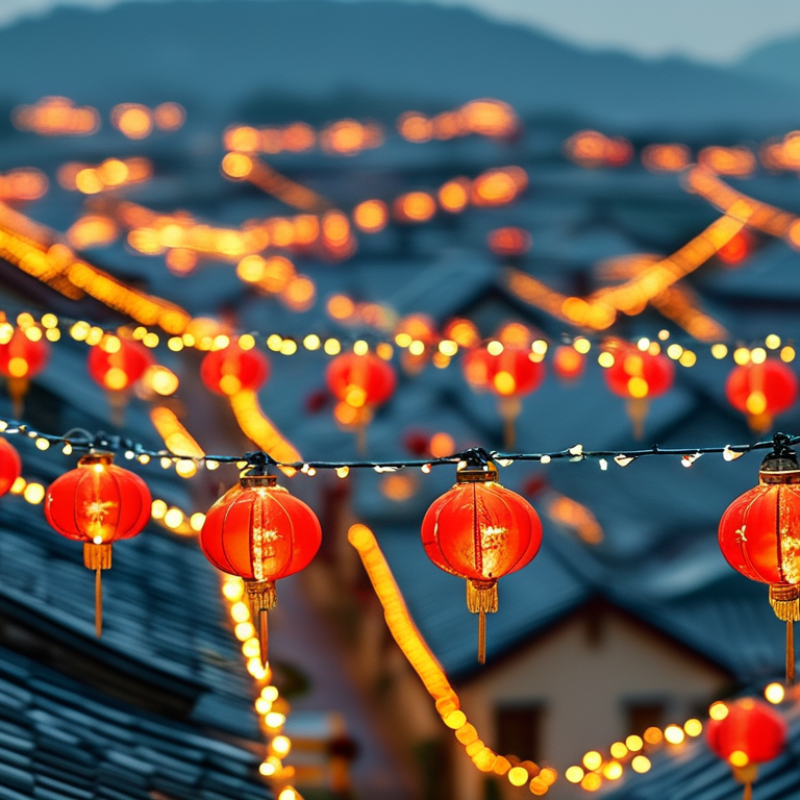
How to Safely Hang China Top Christmas Lights on High Peaks?

Assess the Roof, Peak, and Weather Before Hanging Christmas Lights

Before hanging Christmas lights, inspect the roof, peak, and weather conditions. Look for loose shingles, wet surfaces, moss, ice, and damaged gutters. A steep or fragile roof should not be treated as a normal ladder job. The U.S. Consumer Product Safety Commission reported about 14,800 holiday decorating injuries annually from 2018 to 2020. Falls were a major concern.

Check the peak from ground level first. Identify power outlets, cable paths, anchor points, and fragile roof edges. Use outdoor-rated lights and cords with intact insulation. Keep connections elevated and protected from standing water.

A ladder must stand on firm, level ground, with three points of contact. Never carry long light strings while climbing. Use a tool belt or have someone pass materials upward. Stay away from overhead electrical lines.

Weather can change the risk quickly. Avoid installation during rain, snow, frost, or strong wind. Wet shingles become surprisingly slippery. Wind can shift a ladder before you notice it. NOAA climate records show that winter storms can bring rapid changes in wind and precipitation, even within one day. Wait for a dry, calm forecast. Check again before finishing.

The tempting mistake is trusting a clear morning. I would rather leave one dark section than force a risky repair. NFPA reports an average of 790 home fires annually linked to holiday decorations between 2016 and 2020, so heat, damaged wiring, and overloaded outlets deserve careful attention.

Choose Certified Lights, Strong Fasteners, and Outdoor-Rated Extension Cords

Hanging Christmas lights on a high roofline demands more than brightness. Choose products carrying a recognized safety certification and matching your region’s electrical requirements. Check the label for outdoor use, voltage, wattage, and temperature resistance.

The U.S. Consumer Product Safety Commission reported about 14,800 holiday decorating injuries treated in emergency departments during November and December 2022. Falls represented a major share. A certified light set cannot prevent poor ladder placement, but it reduces avoidable electrical risks.

Use stainless or galvanized fasteners designed for exterior surfaces. Plastic clips should grip firmly without crushing the cable. Never pierce wires with nails or staples. Attach lights before climbing when possible, then use a secured ladder and a spotter.

Outdoor-rated extension cords need weather-resistant jackets, grounded plugs, and enough capacity for the total load. Connect them to a ground-fault circuit interrupter where required. Avoid overloaded adapters and long chains of connected cords.

NFPA reports that decorations caused an average of 835 U.S. home fires annually from 2018 to 2022, with electrical distribution or lighting equipment involved in many cases. Keep connectors above wet ground.

Inspect every cord for cuts, brittle insulation, or loose plugs. I have seen a perfect roofline fail because one hidden connector collected rain. That detail is easy to miss.

Test the arrangement at ground level, but do not leave it energized unattended. Recheck fasteners after wind, because a small movement can become a falling hazard.

Prepare Safe Access Equipment and Personal Fall Protection

How to Safely Hang China Top Christmas Lights on High Peaks?

High-peak lighting begins with safe access, not decoration. Choose inspected scaffolding, a mobile elevating platform, or a properly secured ladder. The equipment must match the roof height, surface, worker load, and weather. OSHA recorded 395 fatal falls among 1,069 construction deaths in 2022. That figure makes height planning a serious responsibility.

Personal fall protection needs equal attention. Wear a correctly fitted full-body harness with an approved lanyard or self-retracting lifeline. Connect only to a verified anchor point. Keep both hands available when positioning lights. Maintain three points of contact on ladders. Never stand on the top cap or overreach from a platform. Keep electrical lines, wet surfaces, wind, and loose decorations under control. A rescue plan is essential. A worker suspended in a harness still needs prompt assistance.

Tips: Inspect access equipment before every shift. Mark fragile roof areas. Stop work when wind increases. Use a spotter near ladders and platforms. The U.S. Consumer Product Safety Commission reported about 14,800 holiday-decoration injuries treated in emergency departments during the 2022 season, with falls among the major causes. A rushed setup can feel harmless, but it is not. Even a careful plan may need revision after a site walk. No checklist replaces judgment.

Fall-Protection Height Triggers for High-Peak Christmas-Light Work

U.S. OSHA commonly requires fall protection at 6 ft for construction activities, 4 ft for general-industry work, and 10 ft when working from scaffolds. Protection may also be required at any height near dangerous equipment or where a fall hazard exists. Select a properly inspected ladder, scaffold, or lift, and use a suitable personal fall-protection system according to local regulations and the equipment manufacturer’s instructions.

Reference: U.S. OSHA fall-protection requirements for construction, general industry, and scaffolds.

Install China-Top Christmas Lights in a Secure Step-by-Step Order

How to Safely Hang China Top Christmas Lights on High Peaks?

Install China-top Christmas lights in a secure step-by-step order. Start by checking the roofline from the ground. Look for loose tiles, wet surfaces, overhead cables, and weak gutters. Read the light set’s outdoor rating and inspect every socket, cable, and plug. Replace damaged parts. Do not improvise here. The U.S. Consumer Product Safety Commission reported about 14,800 holiday decorating injuries treated in emergency departments during November and December 2022.

Place a stable ladder on firm, level ground. Keep three points of contact, and ask another adult to hold the ladder. Extend it about one metre above the landing edge. Install clips from the lower roof section upward, rather than stretching sideways. Leave the cable loose enough for movement, but never let it hang near sharp metal. At high peaks, use an approved extension pole from the ground or hire a trained installer. A small mistake becomes serious quickly.

Connect only outdoor-rated components to a weather-protected, RCD or GFCI-protected outlet. Keep plugs above puddles and secure connections with suitable outdoor covers. Test the full strand before climbing, not after installation. NFPA data for 2016–2020 recorded an average of 790 home structure fires yearly involving seasonal decorations, excluding Christmas trees. That number changed how I check warm plugs and overloaded sockets. I still sometimes underestimate wind exposure, so the final inspection must include movement, water paths, and overnight visibility.

Test, Monitor, and Remove High-Peak Christmas Lights Safely

How to Safely Hang China Top Christmas Lights on High Peaks

High peaks need more than attractive lights. They require careful testing, steady monitoring, and a planned removal process. Before installation, inspect every socket, wire, plug, and connection for cracks, exposed conductors, or moisture damage. Use outdoor-rated lights and a ground-fault protected power source. Do not install during rain, ice, or strong wind. A qualified installer should use suitable fall protection, an approved lift, and a trained ground assistant. Never rely on a ladder alone for a steep or unstable roofline.

Tips:
Test each light strand at ground level first. Check plugs for heat after thirty minutes. Then inspect the display from the ground each evening. Look for flickering, dark sections, sagging cables, water near connections, or unusual buzzing. Stop using the circuit immediately if anything seems abnormal. Secure cables away from gutters, sharp edges, and walking paths. Leave room for thermal movement, because tight wires can pull loose when temperatures change.

Removal deserves the same attention. Switch off and unplug the circuit before touching any cable. Remove lights during calm, dry weather, using the same access equipment and spotter. Do not pull a strand from the peak. Lower it carefully, coil it loosely, and label damaged sections. Even experienced teams can overlook a small split in the insulation. That mistake is worth correcting before next season. Store dry lights in a sealed, ventilated container, not beneath heavy decorations.

How to Safely Hang China Top Christmas Lights on High Peaks? - Test, Monitor, and Remove High-Peak Christmas Lights Safely

Stage Safety Check or Action Measurable Requirement Pass Condition Required Response
Plan Assess the roof, peak, access route, anchor points, overhead electrical hazards, weather, and fall exposure before work begins. Record the work height, access method, anchor locations, circuit location, and emergency contact details. A written task plan is completed and every worker understands the access and rescue method. Postpone the installation if the surface, access route, or rescue plan is unsafe.
Inspect Lights Check the cable, plug, socket holders, seals, connectors, strain relief, and insulation for damage. Zero exposed conductors, crushed sections, cracked sockets, loose connections, or heat damage. The complete light set passes visual inspection before it is taken to height. Tag and remove damaged light sets from service; do not repair exposed wiring with tape alone.
Confirm Outdoor Rating Verify that the light set, connectors, timers, and extension equipment are approved for outdoor use. Outdoor components must have a clearly stated outdoor-use marking; IP44 provides protection against water splashes but not immersion. The rating matches the installation location and the manufacturer's instructions. Replace unsuitable components or relocate them to a protected, approved location.
Check Electrical Load Add the wattage of all connected light sets and compare the total with the circuit, cord, and connection limits. Total load must not exceed the lowest rated capacity of the circuit, cord, plug, timer, or light set. The calculated load remains within every listed electrical rating. Reduce the number of connected sets or use a properly designed circuit inspected by a qualified electrician.
Test Protection Test the ground-fault protection device before use and confirm that it disconnects power when the test button is pressed. The test button must trip the device, and the reset function must restore power only after the fault is cleared. Protection trips and resets correctly before the lights are installed. Stop work and have the electrical installation checked if the device fails to trip or reset.
Set Up Ladder Place the ladder on a firm, level, slip-resistant surface and keep it clear of doors, traffic, and overhead hazards. For a leaning ladder, use the 1:4 angle rule: the base moves approximately 1 unit out for every 4 units of vertical height. The ladder is stable, secured against movement, and positioned according to its instructions. Use a different access system if the peak cannot be reached without overreaching or unstable positioning.
Access the Peak Maintain three points of contact while climbing and keep the body centered between the ladder rails. Two hands and one foot, or two feet and one hand, remain in contact whenever practical. Tools and light strings are raised separately so both hands remain available for climbing. Climb down and reposition the ladder instead of leaning sideways or standing on prohibited steps.
Install Lights Use clips or fasteners designed for the surface; keep cables away from sharp edges, hot surfaces, gutters, and walking paths. No cable is pinched, sharply bent, stapled through, or used to support a person's weight. Every section is supported and connectors remain protected from standing water. De-energize the circuit and correct any unsafe routing before continuing.
Initial Test Energize the installation from a safe position and inspect brightness, flicker, connector temperature, and protective-device operation. No sparks, smoke, buzzing, nuisance tripping, damaged insulation, or unusually hot plugs and connectors. All sections operate normally without signs of overheating or electrical fault. Switch off power immediately if any abnormal condition appears; do not touch wet equipment.
Monitor During Use Check the installation from ground level at the start of each use period and after rain, ice, strong wind, or other severe weather. Look for loose clips, sagging cables, water intrusion, broken bulbs, exposed wiring, and changes in connector temperature. No visible movement, damage, water accumulation, or electrical warning signs are present. Turn off and isolate the lights before inspection or adjustment whenever a fault is suspected.
Weather Stop Rule Do not climb or handle outdoor electrical equipment during rain, snow, ice, lightning, or unsafe wind conditions. Use the access equipment and light-set limits stated in their instructions; never rely on a universal wind limit. The surface is dry enough for secure footing and weather conditions remain within equipment limits. Stop work, isolate power if necessary, and wait for safe conditions.
Remove Safely Switch off the circuit, unplug the lights, verify they are de-energized, and remove them in the reverse order of installation. Never pull the cable; disconnect by holding the plug or connector housing. No cable, clip, socket, or roof material is damaged during removal. Stop if a fastener is stuck or access becomes unstable; reposition the equipment before continuing.
Post-Use Inspection Inspect the light sets after removal, clean and dry them completely, and coil cables loosely without tight bends. Mark and separate any set with damaged insulation, cracked sockets, corrosion, overheating, or missing parts. Only undamaged, dry, clearly identified equipment is placed in storage. Recycle or dispose of defective electrical decorations according to local requirements.
Record Keeping Document installation dates, test results, faults, repairs, weather-related checks, and removal completion. Keep one inspection record for each installation area and update it whenever a fault or change occurs. The record identifies the location, responsible person, date, findings, and corrective action. Do not reinstall equipment with unresolved defects or missing inspection information.
Safety basis: Apply the light-set instructions, ladder instructions, local electrical rules, ground-fault protection requirements, and workplace fall-protection regulations applicable to the installation location.

FAQS

What should I check before buying outdoor Christmas lights?

Choose lights with recognized safety certification and an outdoor rating. Check voltage, wattage, and temperature resistance. Match local electrical requirements.

How can I reduce electrical risks during installation?

Inspect sockets, cables, and plugs before use. Replace cracked insulation or loose plugs. Never pierce wires with nails or staples.

What fasteners work best on exterior surfaces?

Use stainless or galvanized fasteners designed for outdoor use. Plastic clips should hold firmly without crushing the cable. Avoid sharp metal edges.

How should I position a ladder near a high roofline?

Place it on firm, level ground. Keep three points of contact. Extend it about one metre above the landing edge, and ask an adult to steady it.

What is safer for high roof peaks?

Attach clips from the ground when possible. An approved extension pole can reduce climbing. For difficult peaks, use a trained installer.

How should outdoor extension cords be connected?

Use weather-resistant cords with grounded plugs and enough capacity for the total load. Connect them to RCD or GFCI protection where required. Avoid long chains.

How can I protect connections from rain?

Keep plugs and connectors above puddles and wet ground. Use suitable outdoor covers. A hidden connector can collect rain and ruin an otherwise perfect roofline.

Should I test the lights before climbing?

Yes. Test the complete arrangement at ground level first. Do not leave it energized unattended. Check for warm plugs or overloaded sockets.

What should I inspect after windy weather?

Recheck clips, fasteners, cable movement, and loose sections. Look for new water paths and poor overnight visibility. I sometimes underestimate wind exposure, so this inspection matters.

Conclusion

Hanging China top Christmas lights on high peaks safely begins with a careful assessment of the roof, peak structure, surface condition, wind, rain, ice, and other weather risks. Choose certified outdoor lights, durable fasteners, weather-resistant connectors, and outdoor-rated extension cords that match the required load. Before starting, prepare stable access equipment, keep the work area clear, and use appropriate personal fall protection whenever there is a risk of slipping or falling. Never work alone or climb during poor weather.

For anyone learning how to hang Christmas lights on high peaks safely, installation should follow a controlled order: plan the layout, secure the power source, attach clips or fasteners from a stable position, and keep wires away from sharp edges, heat sources, and walking areas. After installation, test the lights from the ground, check for loose sections or damaged cables, and monitor them during use. When the season ends, switch off the power, remove the lights carefully using the same safe access methods, inspect them for damage, and store them in a dry, organized place.

Sienna

Sienna

Sienna is a skilled marketing professional with a deep expertise in our company’s core products and services. With a passion for innovation and detail, she plays a pivotal role in crafting insightful blog posts that not only highlight the unique features of our offerings but also provide valuable......