 Uvily Light
Uvily Light
Uvily Light
When it comes to outdoor lighting, safety is key. The last thing you want is to deal with exploding light bulbs. According to lighting specialist Dr. Emily Carter, “Preventative measures can significantly reduce the chances of bulb explosions.” Understanding how to prevent outdoor light bulbs from exploding is crucial for any homeowner.
Outdoor bulbs are often exposed to various elements. Moisture, strong winds, and temperature fluctuations can create hazardous conditions. Regular maintenance checks can help you identify potential problems before they escalate. Dr. Carter emphasizes the importance of choosing the right bulb type based on your environment. Certain bulbs perform better in specific weather conditions.
Unexpected failures can also arise due to installation issues. Ensure that fixtures are properly wired and sealed. Poor installation could lead to short circuits or overheating. Taking these steps can provide peace of mind. Remember, it's better to be proactive than reactive. By learning how to prevent outdoor light bulbs from exploding, you safeguard your home and loved ones.
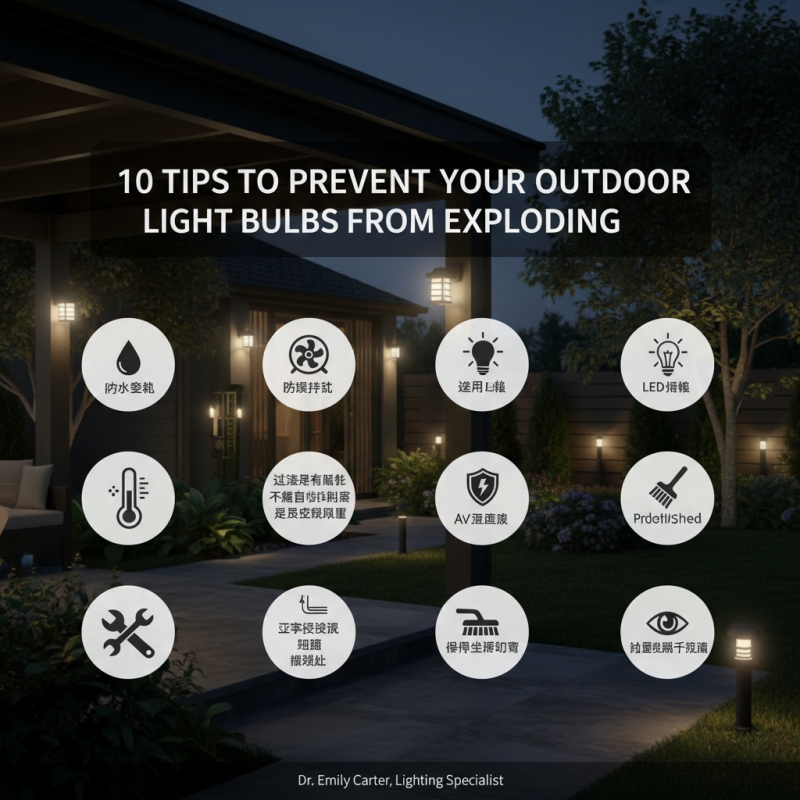
Outdoor light bulb explosions can be startling and dangerous. Understanding the causes of these incidents is essential for prevention. One major factor is the build-up of heat. When bulbs are encased in fixtures that trap heat, it can lead to glass fracture. This is particularly true with incandescent bulbs, which generate significant heat.
Another common cause is moisture exposure. If water seeps into the fixture, it can create a short circuit. Such conditions are often found during storms or snow. Additionally, using bulbs with wattage too high for the fixture can stress the materials. This stress may result in unexpected breakage.
Regular maintenance is vital. Inspect fixtures and wiring for wear or damage. Checking the seal around the fixture can help prevent moisture intrusion. While you can follow guidelines to reduce risks, nothing is foolproof. Each outdoor setup presents unique challenges. Vigilance and awareness are key to safe lighting.
| Tip | Description | Common Causes | Prevention Method |
|---|---|---|---|
| 1. Choose Weather-Resistant Bulbs | Use bulbs specifically designed for outdoor use. | Inadequate insulation from moisture. | Check for outdoor-rated products. |
| 2. Install Protective Covers | Use covers to shield bulbs from elements. | Direct exposure to rain and snow. | Install weatherproof fixtures or shades. |
| 3. Check Voltage Levels | Ensure correct voltage for the bulb type. | Overvoltage can cause stress on the bulb. | Use a voltage meter to check before installation. |
| 4. Avoid Rapid Temperature Changes | Prevent bulbs from sudden temperature shifts. | Rapid cooling or heating can fracture bulbs. | Gradually acclimate bulbs to temperature changes. |
| 5. Regular Maintenance | Check fixtures and bulbs for wear and damage. | Buildup of dirt or corrosion can increase heat. | Clean and inspect regularly. |
| 6. Secure Wiring | Ensure wiring is safe and properly insulated. | Exposed wires can cause shorts. | Use conduit or protective covers for wiring. |
| 7. Avoid Overcrowding Fixtures | Do not exceed recommended wattage. | Overheating can lead to explosion risk. | Adhere to wattage limits specified by fixtures. |
| 8. Choose the Right Type of Bulb | Different bulbs have different heat tolerances. | Incorrect bulb type can lead to failure. | Select an appropriate bulb for outdoor areas. |
| 9. Monitor for Pests | Keep an eye out for insects that can damage wiring. | Rodents and insects may chew on wires. | Seal entry points and consider pest control solutions. |
| 10. Follow Manufacturer Instructions | Always refer to guidelines provided with the product. | Ignoring instructions can lead to misuse. | Read and follow all documentation. |
: Heat build-up in fixtures can lead to glass fractures. Moisture exposure and high wattage bulbs are common culprits.
Water can seep into fixtures, causing short circuits. This is common during storms or snow.
Regularly inspect fixtures and wiring for wear. Check seals to prevent moisture intrusion.
High winds and heavy rain can damage bulbs. Temperature fluctuations may weaken glass or cause overheating.
Use weatherproof fixtures with seals. Regular maintenance is vital to ensure they function correctly.
Yes, choose bulbs rated for extreme weather. Motion-activated lights can also reduce stress on the bulbs.
Space prevents fire hazards after potential explosions. It also protects bulbs from falling debris during storms.
Regular checks are essential. Look for cracks and wear in seals and gaskets to ensure safety.
Yes, using bulbs with excessive wattage can stress materials, increasing the risk of breakage.
Immediately ensure power is off. Use caution to clean up debris and inspect the fixture for damage.
To understand how to prevent outdoor light bulbs from exploding, it is essential to recognize the common causes of such incidents, which often include poor quality bulbs, improper installation, and exposure to extreme weather conditions. By choosing high-quality bulbs specifically designed for outdoor use and employing proper installation techniques, you can significantly reduce the risk of damage and failure.
Additionally, protecting your outdoor lighting fixtures from harsh weather by using appropriate covers or enclosures will provide extra safety. Regular maintenance is also crucial; routinely check for any signs of wear and ensure that fixtures are clean and free of debris. By following these tips, you can effectively safeguard your outdoor lighting and minimize the likelihood of bulb explosions.
